
Culture & Objects
Jade vs. Jadeite: Where Nephrite Fits
Jade is a broader name; jadeite and nephrite identify different materials. Appearance and symbolic meaning do not replace identification and treatment disclosure.
On this page
Are jade and jadeite the same thing?
Jadeite is one of the two main materials commonly called jade; nephrite is the other. Asking 'jade or jadeite?' therefore compares a broad name with one of its principal members. A clearer comparison is jadeite versus nephrite. Chinese uses of the word yu can be broader still, so an object's trade name needs a specific material description.
Modern gemological usage also includes green omphacite under certain conditions, as the Gemological Institute of America explains. Jade is therefore not an absolute two-material category. This comparison focuses on jadeite and nephrite, the two long-established materials, while a laboratory report should identify the particular object more precisely.
Jadeite belongs to the pyroxene group; nephrite is an aggregate of amphibole minerals. This difference concerns the material itself, not whether one is culturally authentic and the other is imitation. Both have histories of use in carving and adornment. An imitation sold under an unclear name is a separate question from which kind of jade an object contains.
Can you tell nephrite from jadeite by looking?
Color, texture, and translucency can provide clues, but a photograph does not establish identification. Jadeite can occur in green, lavender, white, and other colors; nephrite also occurs in more than one color. Green alone therefore cannot prove a material is jadeite, and a white object should not automatically be called nephrite.
A cool feel or a ringing sound is not a reliable home certificate. Avoid scratch, flame, or chemical tests that can damage an object and still leave the identity unresolved. For a consequential purchase, request an identification report from a qualified laboratory and verify that the report actually corresponds to the item offered.
Which is better or more valuable?
Neither name supplies a universal quality grade. Fine jadeite can command very high prices, but that does not make every jadeite object more valuable than every nephrite object. Color, translucency, texture, craftsmanship, condition, treatment, and the particular market all matter. A material identification is not the same as an appraisal or a promise of resale value.
For a piece you plan to wear, fit and construction also matter. Check dimensions, fastening, edges, visible fractures, and the seller's return terms. A preferred color or family association may guide your choice, but it should sit alongside these observable details instead of replacing them.
Ask about treatment, not just authenticity
Ask whether the material has been dyed, bleached, polymer impregnated, or otherwise treated, and what care is appropriate for that exact object. 'Natural jade' by itself is not a complete treatment disclosure. Common jadeite trade letters such as A, B, and C describe treatment categories; they should not be mistaken for a simple best-to-worst quality scale or transferred indiscriminately to other stones.
A historical example of nephrite
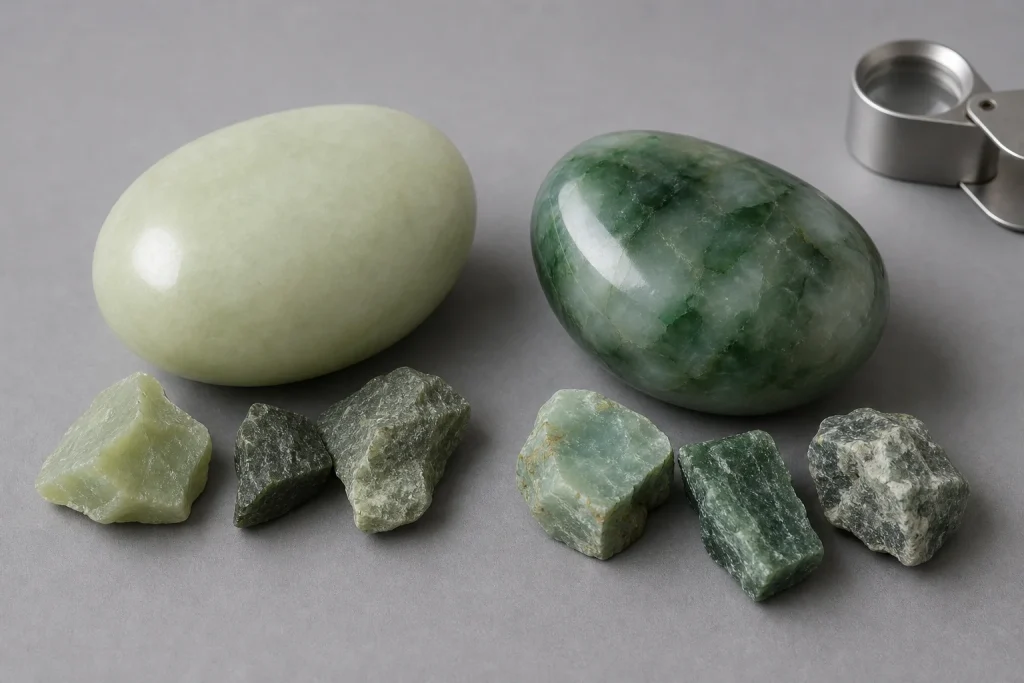
The Metropolitan Museum of Art's collection record identifies a notched disk as nephrite from China's Neolithic Longshan culture, dated 2400-1900 BCE. That documented object provides a specific example of jade's long material history; it is not the object shown in this article's generated illustration and is not for sale on this site. Cultural meanings attached to jade do not demonstrate that wearing it changes health, luck, or another person's feelings.