
I Ching
I Ching Changing Lines: None, One, or Several
Changing lines belong to the primary hexagram. Their number affects which passages are available, but does not supply a universal rule for interpretation.
On this page
What is a changing line?
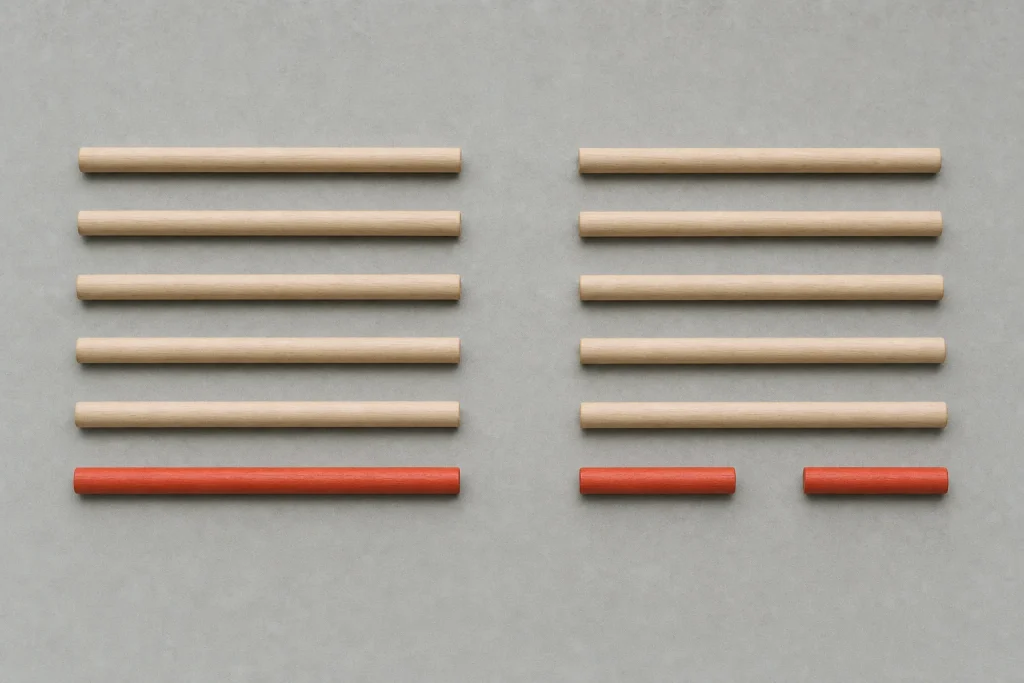
In the three-coin method, a changing line is a recorded 6 or 9. The 6 is yin changing to yang; the 9 is yang changing to yin. Values of 7 and 8 keep their original polarity. Changing these marked positions together produces the relating hexagram. The word 'changing' describes this traditional operation, not evidence that a specific event must happen.
Number the lines from bottom to top. A changing second line means position two above the bottom, regardless of where the explanatory text appears on screen. Keeping the six original totals beside the diagram prevents confusion between a stable broken line and a changing broken line.
No changing lines
If all six values are 7s or 8s, read the primary hexagram and its judgment. There are no selected changing-line passages, and this site does not display a second hexagram. Do not invent a moving line to make the reading feel more complete. A cast with no changes is a valid outcome of the coin procedure.
It also does not prove that nothing will change in real life. You can consider the text's overall situation and ask which parts resemble your concern. The absence of moving lines is a feature of the record, not a guarantee of stability or a reason to ignore new information.
One changing line
Read the primary judgment, then the passage for the changing position in that same hexagram. Finally compare the relating hexagram. For example, 9, 7, 7, 7, 7, 7 from the bottom gives Qian, hexagram 1, with the first line changing, and the relating hexagram is 44. The relevant original passage is Qian's first line, not hexagram 44's first line.
Reading another hexagram for comparison can be useful, but keep that choice distinct from the line selected by the casting. Otherwise the same record can quietly turn into a different reading without a clear reason for the change.
Several changing lines
Two or more changing lines produce several corresponding passages in the primary hexagram. This site shows them all in bottom-to-top order and forms one relating hexagram by changing them together. It does not generate a chain of intermediate hexagrams or choose one passage on your behalf. Traditional reading schools use different selection rules, so state a rule before relying on it.
If two passages seem to pull in different directions, note the tension instead of forcing an immediate verdict. They may describe different positions or conditions in the text. Compare those conditions with known facts before drawing a practical conclusion.
All six lines change
Six 9s give Qian changing to Kun; six 6s give Kun changing to Qian. The received text contains additional Use Nine and Use Six passages for these two cases, which this site displays separately alongside the six line texts. They are not seventh lines. For any other hexagram with six changing lines, do not borrow these special passages or assume that their instructions transfer automatically.