
Shopping guides
Materials & care
Start with the actual material, treatments, and construction. Care for the whole object, including its fittings.
On this page
Confirm what the object is made of
Read the material description for every part: the stone or beads, metal and plating, cord, adhesive, surface coating, and base. Ask about treatments and the care instructions for the exact item. A color, symbolic name, or photograph cannot establish material identity, treatment, or a certification.
Jadeite and nephrite are different materials commonly discussed as jade. A general jade label is not a complete identification or treatment disclosure. For an assembled object, a cleaning method suitable for the stone may still be unsuitable for its cord, setting, finish, or adhesive.
Clean gently and avoid unknown treatments
For routine dust or fingerprints, start with a clean, soft cloth and light pressure. If the material or finish is uncertain, confirm the care instructions before wet cleaning, soaking, or applying a product. Keep jewelry away from household cleaners, bleach, perfume, and other chemicals; do not use abrasive powders or polishing compounds without specific advice for the item.
GIA describes steam and ultrasonic cleaning as safe for untreated jade, but notes that jade may have received various treatments and identifies warm, soapy water as a safe choice. This concerns the stone, not every component of a piece of jewelry. For an item with unknown treatments or mixed materials, our guidance is to follow its specific care instructions before choosing a cleaning method; first confirm that the fittings, cord, finish, and adhesive can tolerate water and the chosen cleaner.
Prevent impacts and store separately
Take jewelry off before tasks that expose it to hard surfaces, heavy pressure, or snagging. Handle stone objects over a stable, padded surface and support the whole object when lifting it. As general care, avoid direct heat and abrupt changes between hot and cold conditions. GIA specifically notes that heat from a jeweler's torch can harm jade.
Store pieces separately in clean, soft pouches or divided compartments so they do not strike or rub against one another. Lay chains without tight tangles and avoid pulling on knots. Put an item away only after it is clean and dry, following the care requirements of its materials rather than adding oils or moisture by default.
Check cords, clasps, and settings
Before wearing, look for frayed cord, stretched or brittle elastic, loose knots, opening rings, and clasps that do not close fully. Check that stones and pendants are secure without twisting or pulling on them. Stop using a piece with damaged fittings until it has been assessed or repaired.
Remove jewelry before bathing or swimming unless the complete item is explicitly suitable for that use. Water resistance cannot be inferred from the stone alone. Keep small beads and loose components out of the reach of young children, and have repairs made with materials appropriate to the original construction.
Place ceramic and wooden objects thoughtfully
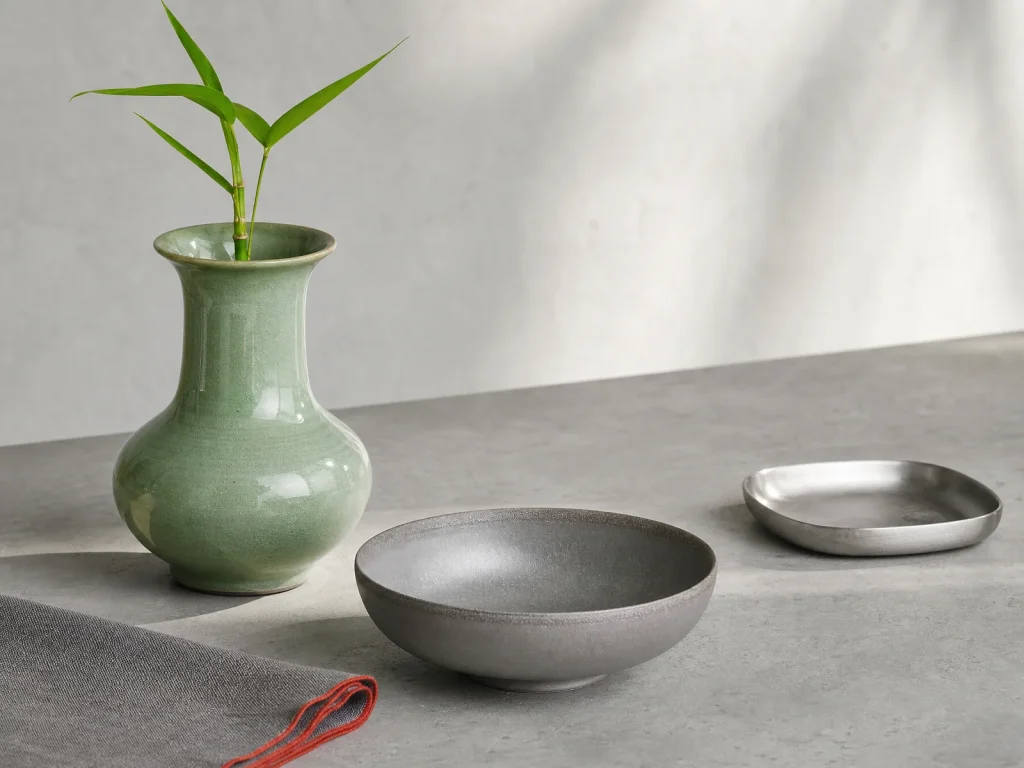
Place ceramic, stone, or other heavy objects on a level, stable surface away from edges and busy routes. Check the base for rough points and use a suitable protective pad where needed, without making the object unstable. Lift from the base with support for the body, not by a handle, narrow neck, or attached ornament. A decorative vessel should not be assumed to be watertight or suitable for food.
For wooden objects, favor a reasonably stable indoor environment away from persistent damp, direct heaters, and strong sunlight. Dust gently and wipe accidental moisture promptly. Do not soak the object, leave it against a wet wall, or apply oil or wax unless its finish is known to permit that treatment. Follow the maker's instructions for any coated or composite surface.
Keep driving space clear
An object used at home is not automatically suitable for a car. Do not place or hang objects where they can obstruct the driver's view, mirrors, controls, pedals, or seat belts. Keep the steering wheel, dashboard airbag covers, and all airbag deployment zones clear, following the vehicle manual.
Loose or heavy decorations can move during braking or a collision. Do not rely on an improvised fixing or a product photograph as evidence of secure installation. Heat and sunlight in a parked car can also affect the object and its fastenings. If suitability and secure placement cannot be confirmed, keep the object out of the passenger compartment. Cultural meaning does not provide driving protection.